
What problem does LYNQSYS solve?
LYNQSYS reduces downstream uncertainty by improving healthcare data quality and governance before data reaches analytics, reporting, AI, or operational workflows.
LYNQSYS refines, governs, and publishes healthcare data so trust is not abstract. Quality and data governance are built into platform behavior, making downstream data more usable, inspectable, and defensible.
LYNQSYS is designed for environments where data cannot simply be moved. It must be refined, governed, evidenced, and published in a way downstream teams can inspect and rely on.
LYNQSYS reduces downstream uncertainty by improving healthcare data quality and governance before data reaches analytics, reporting, AI, or operational workflows.
It receives healthcare data from existing sources, applies refinement and governance, records evidence, and publishes outputs that are easier to use and defend.
Yes. The platform story emphasizes a FHIR-native architecture using GCP Healthcare API and native FHIR store rather than treating FHIR as a wrapper around disconnected data.
Evidence shows how data was handled, which helps downstream teams evaluate trust instead of relying only on policy, assumptions, or manual cleanup.
LYNQSYS works with existing healthcare data sources and downstream systems. It applies quality and governance directly in the path between source inputs and published outputs, rather than leaving remediation entirely to downstream teams.
That model helps organizations move from fragmented data handling to a more operationally consistent approach where evidence is visible and downstream use is easier to support. That model is built on a FHIR-native architecture using GCP's Healthcare API and native FHIR store — not a FHIR wrapper — so governance, validation, and analytics operate on the same data layer rather than across disconnected systems.
In Interstella terms, quality is the operational work that makes healthcare data easier to use, easier to interpret, and less dependent on repeated downstream remediation.
Check incoming data against expected structure, content, and operational requirements.
Support more consistent downstream use by aligning data handling around standards-aware processing.
Reduce avoidable variability so receiving systems are not forced to interpret every source differently.
Surface gaps, conflicts, and quality-related issues earlier so teams can address them with greater visibility.
Within LYNQSYS, governance is reflected in how data is handled, inspected, and published. It is not only policy language; it is part of platform behavior.
Make handling visible so teams can see how data moved through the platform.
Preserve context around source-to-output movement to support downstream inspection.
Support review of what changed, how it changed, and why that handling matters for reliance.
Publish structured outputs in a way that better aligns usability with accountability.

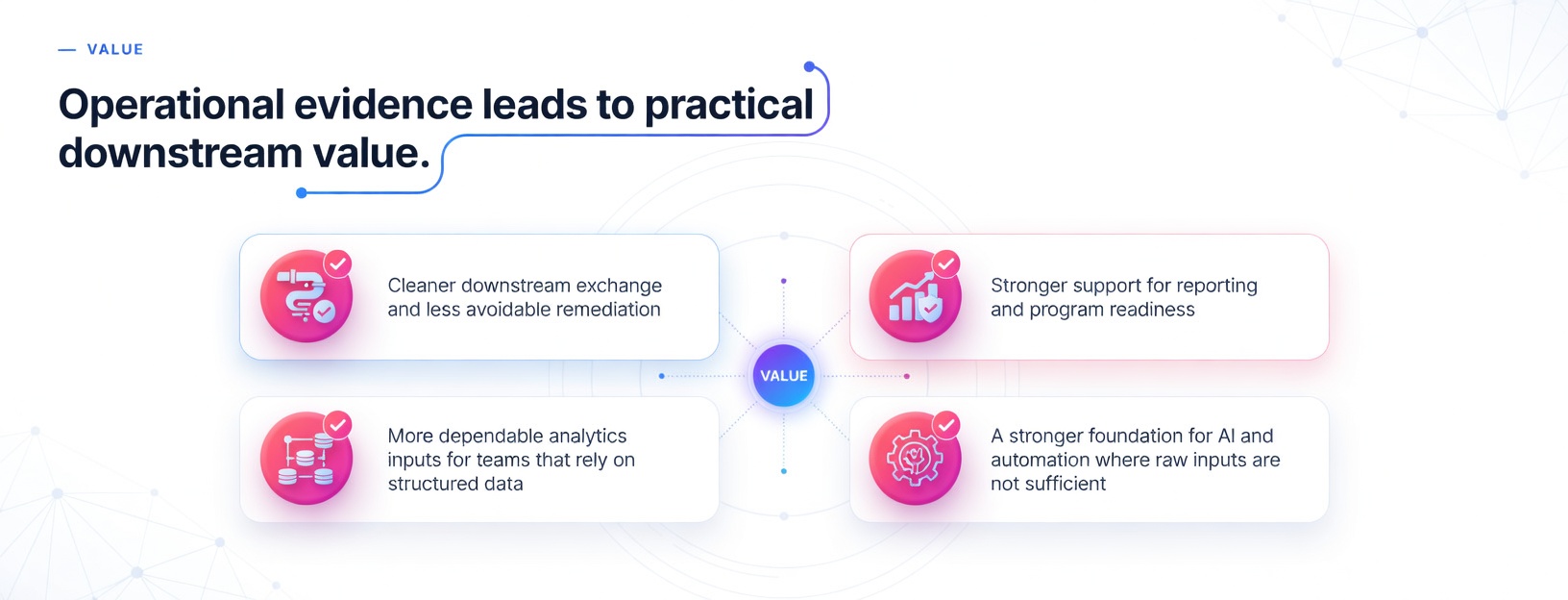
LYNQSYS supports evidence that helps organizations understand how data was handled and why published outputs are more dependable downstream.
Show whether expected quality-oriented checks were applied and where issues were identified.
Make refinement and governance activity more inspectable for teams that need visibility into processing.
Support more accountable downstream delivery by connecting published outputs to the handling that produced them.
LYNQSYS is supporting trusted healthcare data operations in production environments, giving organizations a live operating model for refinement, governance, and downstream publishing.
LYNQSYS residing on Amazon Web Services (AWS) and Google Cloud Platform (GCP) has attained a HITRUST e1 certification, and native FHIR outputs are already operating in production environments.
LYNQSYS is already being used in production environments to help organizations move beyond legacy HIE platform models and support more dependable downstream data operations.
Interstella is designed for organizations that need trust through both quality and data governance, rather than only transport, warehousing, or isolated data quality checks.
| Approach | Typical Strength |
|---|---|
| Legacy HIE / movement-first platforms | Support data transport across participating systems, but may leave downstream teams to do more of the trust-building work themselves. |
| ETL / warehouse-first approaches | Support consolidation and downstream analytics preparation, but often after data has already moved into later-stage pipelines. |
| Data quality-only tools | Help identify or remediate specific quality issues, but may not connect that work to governance, evidence, and controlled publishing. |
| FHIR wrapper approaches | Add a FHIR layer on top of existing data stores. May produce FHIR-shaped outputs without FHIR-native storage, governance, or standards conformance underneath. |
| Interstella / trust through quality + governance | Brings quality, governance, evidence, and publishing together so downstream data is more usable and more defensible. |
DTRF (Data Trust and Refinery Framework) is the framework Interstella uses to organize how quality and data governance support trust. It provides a practical way to think about how trust is built, evidenced, and translated into downstream reliance.
On the platform, that means DTRF is not separate from operations. It informs how LYNQSYS supports refinement, governance, and visible evidence.
Together, they support trust that can be evidenced and used downstream with greater confidence. DTRF organizes trust evaluation across five dimensions, validated by 593 structured rules applied at the data element level.
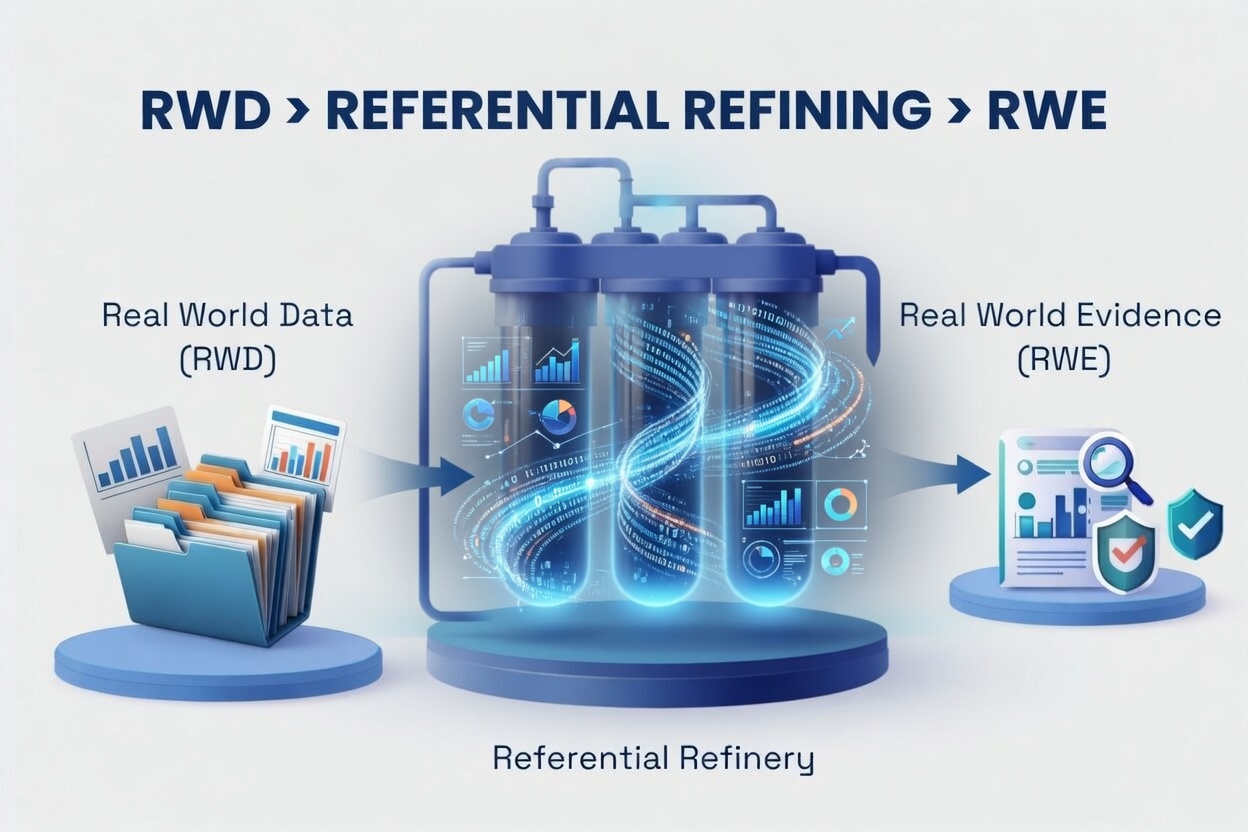
Interstella uses the term referential data refinery to describe a platform approach informed by reference-aware, standard-aware, and governance-aware processing. The goal is not only to move data, but to improve its reliability, interpretability, and utility over time.
We can walk through where quality, governance, and evidence belong in your current healthcare data flow.
Start a Conversation